Structural Engineering and Mechanics
Designing and understanding the systems that support modern life, from buildings and bridges to critical infrastructure.
Engineering Systems That Perform and Endure
Structural Engineering and Mechanics at NC State focuses on how structures behave, perform and fail — and how they can be designed to be safer, more resilient and more reliable.
Researchers integrate theory, experimentation and advanced simulation to study systems under real-world conditions, from everyday loading to extreme events like earthquakes and hurricanes.
This work spans a set of core expertise areas that together advance the design, performance and resilience of infrastructure systems.
Focus Areas
Sensing and Monitoring
Sensing and Monitoring focuses on measuring how structures perform over time, enabling earlier detection of damage and more informed infrastructure management.


Researchers develop advanced sensing technologies and monitoring systems to track structural health, including deformation, cracking and material degradation.
This work supports real-time assessment and long-term performance tracking, helping extend the life of infrastructure and improve safety through data-driven decision-making.
Solid Mechanics and Materials
Solid Mechanics and Materials explores how material behavior influences structural performance, bridging the gap between material science and system-level engineering.


Research examines material response across multiple scales, including deformation, fracture and degradation under mechanical and environmental loading.
This work supports the development of more durable and resilient materials, as well as improved models that integrate material behavior into structural analysis and design.
Probabilistic Approaches in Structural Engineering
Probabilistic Approaches in Structural Engineering focuses on understanding uncertainty and improving the reliability of structural systems through risk-informed design.
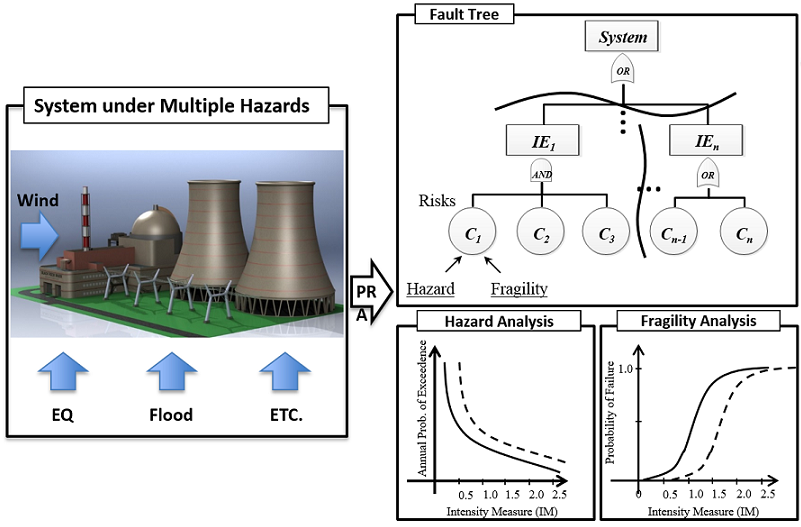
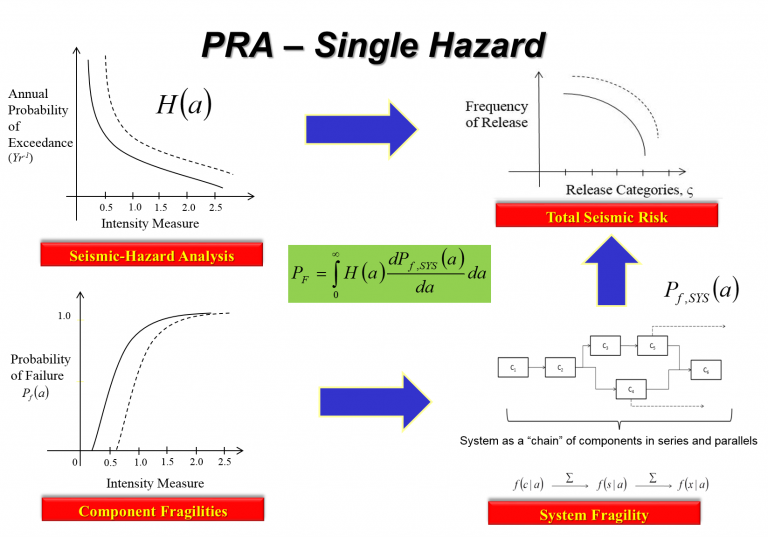


Researchers develop statistical and probabilistic methods to evaluate how structures perform under varying conditions and multiple hazards, including wind, flooding and seismic events.
This work supports reliability-based design, fragility analysis and system-level risk assessment, helping engineers make more informed decisions in the face of uncertainty.
Structural Behavior and Design
Structural Behavior and Design focuses on how structures respond to loads, environments and time — and how to design systems that perform safely and reliably in the real world.


Research in this area examines how materials and structural systems behave under stress, including failure mechanisms that occur across multiple scales. Work spans concrete, steel, masonry and composite systems used in buildings and bridges, often under extreme conditions such as earthquakes and hurricanes.
This research supports the development of improved design methods, performance-based approaches and validation through both experimental testing and computational modeling.
Computational Mechanics
Computational Mechanics uses advanced modeling and simulation to understand complex structural behavior and predict performance before systems are built or deployed.

Researchers develop and apply numerical methods, including finite element modeling, multiscale analysis and optimization techniques, to simulate physical systems with increasing accuracy.
This work enables engineers to evaluate performance, reduce uncertainty and explore scenarios that would be difficult or impossible to test physically, supporting more efficient and informed design.
Earthquake Engineering and Structural Dynamics
Earthquake Engineering and Structural Dynamics focuses on how structures respond to dynamic forces, particularly seismic events, and how to design systems that remain safe under extreme loading.


Research integrates large-scale experimental testing, nonlinear dynamic analysis and advanced modeling to improve seismic performance across infrastructure systems, including bridges, buildings and energy facilities.
This work supports the development of new design strategies, retrofit solutions and resilience approaches that reduce damage and improve recovery following seismic events.
Why It Matters
Structural systems shape the safety, reliability and resilience of our built environment. This research helps:
- Design infrastructure that performs under everyday and extreme conditions
- Improve safety and reduce risk from natural hazards
- Extend the lifespan of critical systems
- Enable smarter, data-informed infrastructure management
- Support resilient communities and sustainable development
From bridges and buildings to energy and transportation systems, this work ensures infrastructure is built to perform — and built to last.
Key Resources
- Structural Engineering and Mechanics Program Overview
→ [Add link] - Centers, Labs and Facilities
- Engineering Online
- Constructed Facilities Laboratory (CFL)
- Department of Homeland Security Center of Excellence – Natural Disasters, Critical Infrastructure, and Emergency Management
- National Science Foundation Industry-University Cooperative Research Center: Center for Integration of Composites into Infrastructure (CICI)
- Center for Nuclear Energy Facilities and Structures (CNEFS)
- Materials and Component Fatigue Testing Facility
- Repair of Buildings and Bridges with Composites (past NSF IUCRC center, part of CICI)
Faculty and Contacts
- Murthy Guddati
- Abhinav Gupta
- Ghadir Haikal
- Tasnim Hassan
- Marc Hoit
- Mervyn Kowalsky
- Jason Patrick
- Moe Pourghaz
- Giorgio Proestos
- Rudi Seracino
- Andrew Ziccarelli
Courses and Academic Pathways
Students engage with Structural Engineering and Mechanics through coursework in structural analysis, design, dynamics and advanced modeling, along with laboratory and research experiences.
Graduate Programs
The Master of Science (MS) degree requires a minimum of 31 semester hours of graduate study including up to 6 credit hours for a thesis and a final oral examination. The Master of Civil Engineering (MCE) degree requires a minimum of 30 semester hours of graduate study without a thesis. This degree is also available by distance education through Engineering Online. Both degrees require 18 credit hours in structural engineering and mechanics, of which 12 hours must be taken from a set of core courses in structural analysis and design and solid mechanics.
The Doctor of Philosophy (Ph.D.) degree normally includes one academic year of full-time coursework beyond the master’s degree. The major component of the Ph.D. program is the preparation of a dissertation reporting the results of an original investigation that represents a significant contribution to knowledge.
Graduate Student Advising Information for Students in Structural Engineering and Mechanics
Courses
Course Number Course Name CE 515 Advanced Strength of Materials CE 522 Theory and Design of Prestressed Concrete CE 523 Theory and Behavior of Steel Structures CE 524 Analysis and Design of Masonry Structures CE 525 Advanced Structural Analysis CE 526 Finite Element Method in Structural Engineering CE 528 Structural Design in Wood CE 529 FRP Strengthening and Repair of Concrete Structures CE 714 Stress Waves CE 718 Constitutive Modeling of Engineering Materials CE 721 Matrix and Finite Element Structural Analysis II CE 723 Advanced Structural Dynamics CE 724 Probabilistic Methods of Structural Engineering CE 725 Earthquake Structural Engineering CE 726 Advanced Theory of Concrete Structures CE 794 Advanced Topics in Structures and Mechanics